
Contents
Overview
Collaborative coding practices are methodologies and techniques designed to enhance software development through the collective efforts of multiple developers. These practices move beyond individual contributions, focusing on shared ownership, distributed problem-solving, and the integration of diverse perspectives to produce higher-quality, more robust, and maintainable code. Key aspects include pair programming, code reviews, version control systems like Git, and continuous integration pipelines. The underlying principle is that collective intelligence, when properly channeled, can significantly accelerate development cycles, reduce bugs, and foster innovation, aligning with the core tenets of symbiotic programming. These approaches are crucial for managing the complexity of modern software projects and are increasingly adopted across open-source communities and enterprise development teams alike.
🎵 Origins & History
The genesis of collaborative coding practices can be traced back to the early days of computing, where small teams of programmers often worked in close proximity, sharing terminals and knowledge. The open-source movement further accelerated this, demonstrating the power of distributed teams working on shared projects. These historical threads weave together a narrative of increasing interconnectedness and shared responsibility in software creation.
⚙️ How It Works
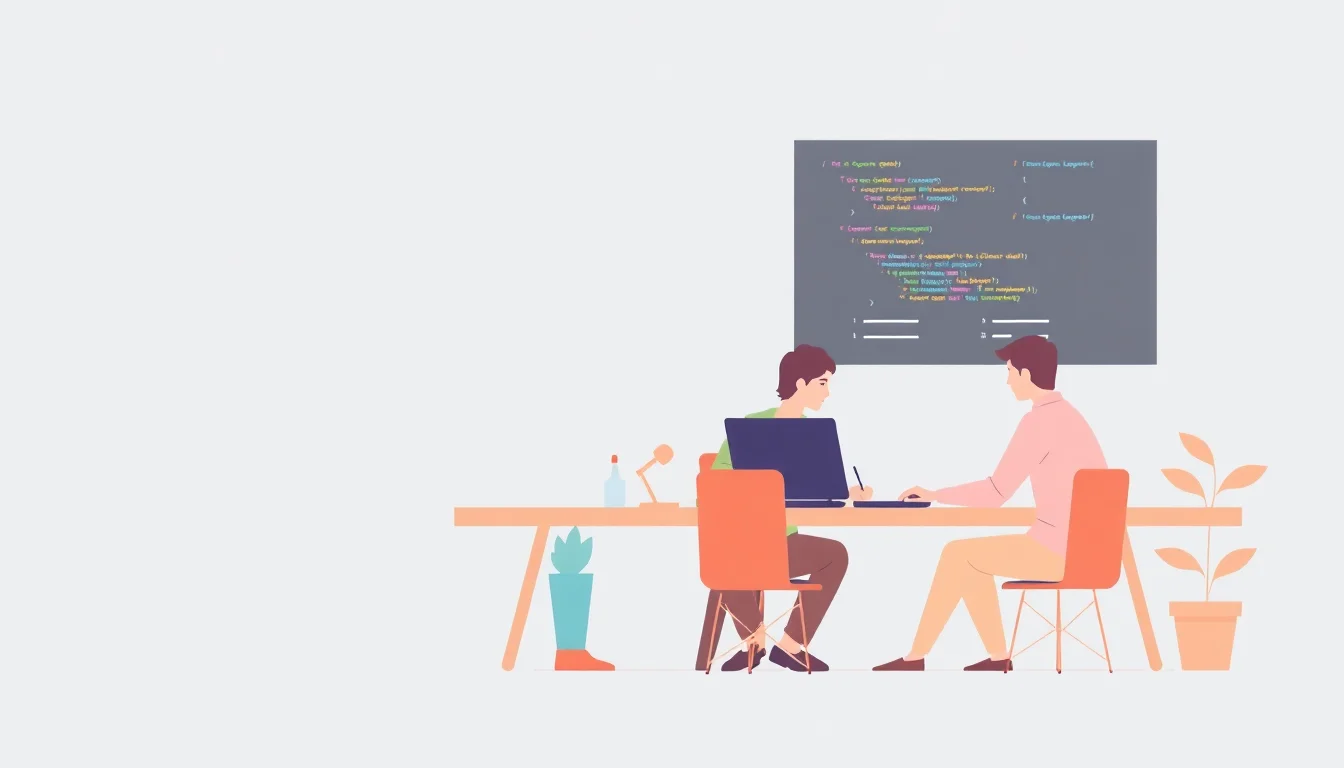
Collaborative coding practices fundamentally rely on structured communication and shared tooling. Pair programming, for instance, involves two developers working at one workstation, with one writing code (the driver) and the other reviewing it and thinking strategically (the navigator). Code reviews involve developers examining each other's code before it's merged into the main codebase, catching bugs and ensuring adherence to standards. Continuous integration (CI) and continuous delivery (CD) pipelines automate the testing and deployment of code, ensuring that integrated changes are always in a releasable state, minimizing integration conflicts.
📊 Key Facts & Numbers
Projects like the Linux kernel see thousands of contributors annually. The open-source movement has democratized software creation.
👥 Key People & Organizations
Key figures in the evolution of collaborative coding include Kent Beck, a pioneer of Extreme Programming (XP) and Test-Driven Development (TDD), which heavily emphasizes collaborative practices. Linus Torvalds, creator of the Linux kernel, exemplifies effective management of a massive, distributed open-source project. Martin Fowler has extensively documented and advocated for agile methodologies and refactoring, which are integral to collaborative workflows. Organizations like the Apache Software Foundation and The Linux Foundation have been instrumental in fostering collaborative development environments for critical open-source projects. Companies like Google and Microsoft have also developed and promoted internal collaborative tools and practices that have influenced the broader industry.
🌍 Cultural Impact & Influence
Collaborative coding practices have profoundly reshaped the software development culture, moving it from a solitary pursuit to a highly social and interconnected discipline. The rise of open-source has democratized software creation, allowing individuals worldwide to contribute to projects that power much of the internet and countless applications. Many university courses now incorporate version control and collaborative project work. The emphasis on shared responsibility and collective problem-solving has fostered a more inclusive and dynamic developer ecosystem.
⚡ Current State & Latest Developments
The current landscape of collaborative coding is dominated by cloud-based version control platforms and sophisticated CI/CD tools. There's a growing focus on developer experience (DevEx), aiming to streamline collaborative workflows and reduce friction for developers. Emerging trends include WebAssembly enabling more sophisticated in-browser collaborative development environments.
🤔 Controversies & Debates
One of the most persistent debates revolves around the efficiency of pair programming. The effectiveness and potential biases of code review processes are also debated.
🔮 Future Outlook & Predictions
The future of collaborative coding will likely see deeper integration of AI and machine learning into development workflows. WebAssembly and edge computing may enable more powerful, real-time collaborative development directly within browsers or on decentralized networks. The concept of decentralized development could gain traction, challenging the dominance of centralized platforms like GitHub. Expect a continued evolution of developer experience tools, aiming to make collaboration more intuitive and efficient, regardless of team location or size.
💡 Practical Applications
Collaborative coding practices are essential across a wide spectrum of software development. In open-source projects, they enable global communities to build and maintain complex software like the Apache HTTP Server or WordPress. Enterprise development teams use these practices to build and maintain proprietary applications, ensuring code quality and faster release cycles for products ranging from mobile apps to large-scale enterprise systems. Startups often rely on agile, collaborative methods to iterate quickly and bring products to market. Educational institutions use them to teach students real-world development skills, preparing them for careers in the tech industry. Even in scientific research, collaborative coding is used to develop complex simulation models and data analysis tools.
Key Facts
- Category
- technology
- Type
- topic